"Is the CFA worth it?" has a money part and a career part. This page does the money part with numbers: what you pay, what you can expect back, and how long it takes to earn the cost back in different countries. For the career part, see is the CFA worth it.
What you actually pay
| Item | Typical cost (USD) |
|---|---|
| Three exam fees, early registration | 3,520 |
| Three exam fees, standard registration | 4,570 |
| Optional third-party materials | 0 to 4,500 (up to about 1,500 per level) |
| One retake (a fair assumption, since fewer than half pass each level) | 1,140 to 1,590 |
| Realistic total | about 4,000 to 8,000 |
The fees include CFA Institute's own curriculum, practice questions and mock exams. The full breakdown is in how much the CFA costs.
The biggest cost is not money. It is 900 to 1,000 hours of study across three levels, usually over two to four years, taken from evenings, weekends and holidays.
What you can expect back
Three independent sources point the same way.
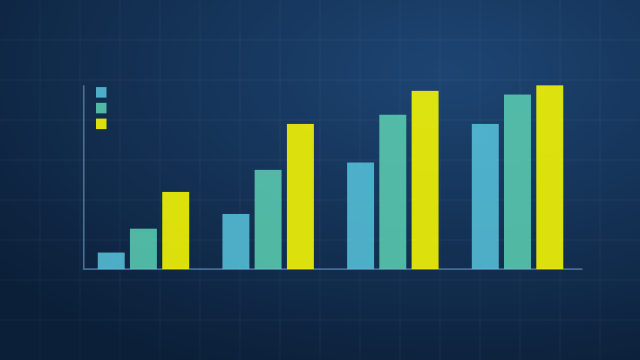
1. Pay rises after passing. In Kaplan Schweser's 2024 survey of 728 candidates and charterholders in North America and Europe, one in three got a pay rise after their most recent exam pass, and people working in finance before and after the exam reported average earnings growth of about 15%: about 14% after Level I, 9% after Level II, 17% after Level III and 17% on becoming a charterholder. One in five received a promotion.
2. The pay gap with experience. CFA Institute's 2026 study for India (2,770 respondents) found that recent charterholders, with about six years' experience, averaged ₹32 lakh a year. All charterholders, averaging about ten years, averaged ₹67 lakh. More than 70% of charterholders with eight or more years' experience earned over ₹40 lakh.
3. Employer support. Two-thirds of candidates in the same Schweser survey had their employer pay for exams or study materials. If yours will, your own cost falls close to zero.
Raises are not caused by the exam alone. People who pass are often also the people who were about to be promoted. Read these numbers as what typically happens, not a guarantee.
The payback in each country
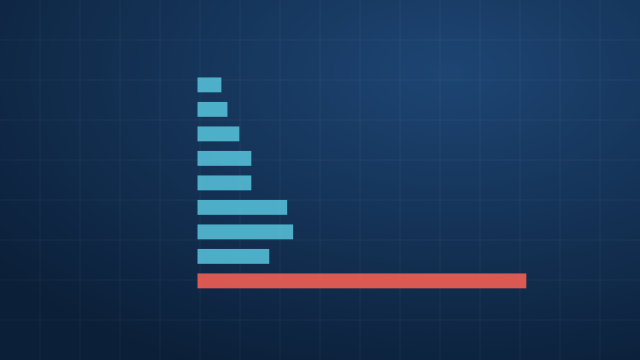
The chart above shows the three exam fees (early registration) in months of base salary for a typical investment analyst:
- US, Switzerland, Germany, UK, Singapore: under one month. A 10–15% raise pays the fees back within a year.
- UAE and China: about one and a half months.
- India: about five and a half months of a typical analyst's base pay (PayScale median about ₹7.2 lakh), but only about one month of a recent charterholder's pay (₹32 lakh). The fees look large at the start of a career and small once the charter has done its work.
A simple rule: payback in months ≈ total cost ÷ monthly raise. With USD 5,000 total spent and a 15% raise on a USD 60,000 salary (USD 750 a month), you are even in about seven months. On ₹8 lakh, a 15% raise is ₹10,000 a month, so ₹4.7 lakh of costs (about USD 5,000) takes about four years. If the charter moves you into a role that pays ₹30 lakh or more, it pays back within months.
When the money case is strong
- You work in, or are moving into, investment roles: research, portfolio management, wealth management, risk.
- Your employer pays or reimburses the fees.
- You are early in your career, so the higher pay compounds for decades.
- You are in a market where the charter is still rare, which includes much of Asia, the Middle East and Africa. Pay in these markets is rising fast: 69% of respondents in CFA Institute's India study received raises of more than 20% in 2025.
When it is weaker
- Your career is in audit, tax or corporate accounting, where CPA, ACCA or CA is the stronger signal.
- You want investment banking deal work, where internships and networks matter more.
- You cannot give it 300 hours per level. Paying three exam fees and passing none is the worst outcome.
How to cut the cost
- Register early for every level: USD 350 less each time.
- Use the free curriculum and question bank included in the fee before buying extra materials.
- Apply for a CFA Institute scholarship (Access, Student or Professor) if you qualify.
- Ask your employer for fee sponsorship and study leave before you register.
- Pass first time. A retake costs another fee and another six months.
Questions people ask
Does the CFA increase salary?
On average, yes, but through the jobs it opens. In a 2024 Kaplan Schweser survey, candidates working in finance reported about 15% higher earnings after passing an exam, and one in three received a raise.
How long does it take to earn back the cost of the CFA?
In high-pay markets, often within a year. In India, about five months of a junior analyst's base pay covers the fees, so the payback depends on moving into a better-paid investment role, where charterholders average ₹32 lakh or more.
Is the CFA worth it in India?
Increasingly so. CFA Institute's 2026 India study puts average pay for all respondents, including candidates, at ₹22.1 lakh (up from ₹19.3 lakh in 2022), recent charterholders at about ₹32 lakh and experienced charterholders often above ₹40 lakh.
Will my employer pay for the CFA?
Many investment firms do: two-thirds of respondents in the Schweser survey had some employer support, mostly exam fees and prep materials. Ask before you register.
Sources
- CFA Institute: Impact study on compensation and career, India 2026
- Kaplan Schweser: CFA Program survey, November 2024 (PDF)
- CFA Institute: CFA Program exam fees
- PayScale investment analyst salary pages, for example US and India (retrieved 16 November 2026)