Most answers to "how long does the CFA take?" give the fastest possible route. That is not what most people experience, because fewer than half of candidates pass each level. We built a simple model of the real calendar to see what actually happens.
The rules that set the pace
- Exam windows: Level I four times a year (February, May, August, November), Level II three times (May, August, November), Level III twice (February and August).
- Retakes: at most two attempts a year at the same level, at least six months apart.
- Study time: most people who pass report about 300 hours per level. At 12 to 15 hours a week, that is about six months before each exam, so we assume at least six months between consecutive exams.
The model
We sent 100,000 simulated candidates through those rules. Each candidate sits Level I in a window, then the next level at the first window at least six months later. A failed level is retaken at the first allowed window. We ran three versions:
- Average: pass chances like the recent pass rates, about 43% at Level I, 45% at Level II and 47% at Level III.
- Stronger: 60% at each level, roughly a well-organised candidate who follows a plan.
- Well prepared: 75% at each level, a candidate with a strong background who completes 300+ hours and several mocks every time.
What it shows
| Average | Stronger | Well prepared | |
|---|---|---|---|
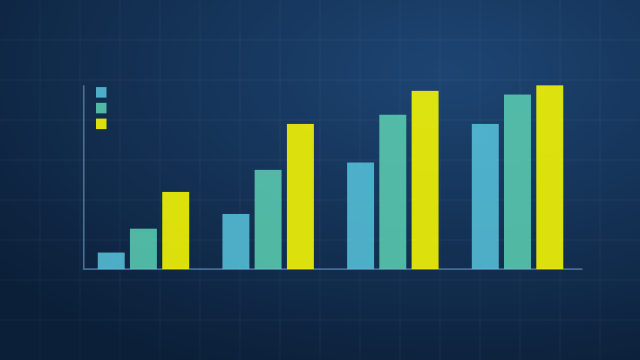
| Pass all three first time | 9% | 22% | 42% |
| Typical (median) time from first exam to passing Level III | 3 years | 2 years | 1.5 years |
| Finished within 2 years | 30% | 54% | 79% |
| Finished within 3 years | 58% | 84% | 97% |
| Average number of exam attempts | 6.7 | 5.0 | 4.0 |
Three things stand out:
- Preparation changes the timeline more than ambition does. Going from a 43% to a 60% pass chance cuts a year off the typical journey and saves almost two exam fees.
- One failure costs six months or more. With only two Level III windows a year, a fail at Level III often costs a full year.
- A one-year finish is rare. It needs three first-time passes in a row and the right windows. The realistic fast track is 18 months to two years.
The model does not include people who stop, and real candidates are not identical, so read the numbers as a guide to how the calendar and pass rates interact, not as a forecast for you.
Then the experience requirement
Passing Level III is not the end. The charter also needs 4,000 hours of relevant work experience (over at least three years), which you can build before, during or after the exams. Many people finish the exams and the experience at about the same time, which is why "three to four years to the charter" is common.
How to land in the faster group
- Plan 300+ hours per level and protect them in your calendar (our free Excel study planner does this).
- Pick your windows backwards from when you want to finish, leaving a six-month gap each time.
- Book Level III with a buffer: with only two windows, a retake is expensive in time.
- Take full mock exams in the last six weeks; they are the best predictor of a pass.
- Avoid long breaks between levels. Knowledge from Level I fades, and Level II builds directly on it.
Questions people ask
How many years does it take to pass the CFA?
In our model, half of candidates with average pass chances finish all three exams within about three years of their first attempt; well-prepared candidates typically finish in 18 months to two years. The charter also requires 4,000 hours of experience.
How many attempts does it take to pass the CFA?
At average pass rates, about 6 to 7 attempts in total for three levels, so most people fail at least once. A well-prepared candidate averages about 4.
How many hours do I need to study for CFA Level I?
Most people who pass report about 300 hours. In a 2024 Kaplan Schweser survey, half of recent Level I passers studied 300 hours or more; for Level II it was 73% and for Level III 62%.
Can I pass the CFA in one year?
Only with first-time passes at all three levels and well-timed windows (for example February, August, then the next February). Fewer than one in ten candidates manage it at average pass rates.