Ask candidates why the CFA exams are hard and you rarely hear "the ideas are too difficult". You hear "there is so much of it", "I ran out of time" and "I was working sixty hours a week". The difficulty is real, but it comes from a few specific places, and each one can be planned for.
1. Volume
Level I alone covers ten topic areas, from ethics and statistics to derivatives and portfolio management. Each level needs 300 hours or more of study. The problem is not any single reading but keeping all of them fresh at once.
2. Depth grows at every level
Level I asks whether you know and can apply an idea. Level II puts several ideas into one case study and asks you to value something. Level III asks you to judge and explain a recommendation for a client, partly in writing. Each step needs a different skill, not just more knowledge.
3. A high pass line
The minimum passing score is set after each exam to reflect what a qualified candidate should know, and recent pass rates have been in the low to high 40s percent. There is no curve that rescues a weak session.
4. Life gets in the way
Most candidates work full time. Six months of evenings and weekends, with travel, deadlines and family, is where most plans break, not on the exam day itself.
5. Memorising instead of understanding
Formulas learned by rote fade within weeks, and the exams are good at changing one detail so that a memorised pattern fails. Understanding why a result is true makes it both easier to recall and harder to trick.
The hardest topics
Candidates most often name financial statement analysis and fixed income at Level I, valuation-heavy readings at Level II, and constructed-response answers at Level III. Ethics is not hard to understand, but it is easy to lose marks on through careless reading.
How to make it easier
- Start early and protect a weekly rhythm of study (see the study plan).
- Learn from first principles so ideas stay with you across all three levels.
- Practise under time with full mock exams and keep an error log.
- Give ethics more time than its size suggests.
The numbers behind "hard"
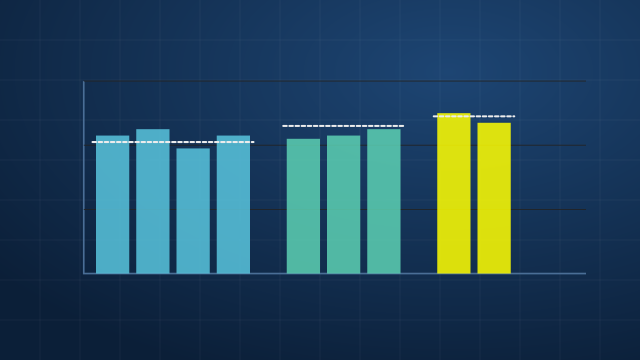
- Pass rates have been below 50% at every level in most recent sessions (about 43% at Level I, 45% at Level II and 47% at Level III). See pass rates.
- Study time: in a 2024 Kaplan Schweser survey, 73% of recent Level II passers studied 300 hours or more.
- Attempts: at average pass rates, a candidate needs about six to seven exam attempts to clear all three levels, and fewer than one in ten pass every level first time (our simulation).
For a topic-by-topic view, see the most challenging CFA topics.
Questions people ask
Is the CFA harder than the CPA?
They are hard in different ways. The CFA covers broader investment content across three long exams spread over years; the CPA is more accounting-focused and has more sections taken closer together. Because the CPA reports pass rates section by section, the two are hard to compare directly; choose by career, not by difficulty.
Which CFA level is the hardest?
Many candidates say Level II, for the depth of valuation and accounting, although pass rates are similar across the levels and Level III's written answers are a different kind of challenge.
Can an average student pass the CFA?
Yes. Steady study, enough practice and an understanding-first approach matter far more than raw talent.