Reading builds understanding; practice converts it into marks. Prep providers agree that full mock exams under timed conditions are the most valuable hours of the last month.
Sit them like the real thing
- Same time of day as your exam, same length, same break.
- Approved calculator only, no notes, phone in another room.
- Score it, but do not stop there.
Review takes longer than the mock
For every wrong answer (and every right answer you guessed), write one line in an error log:
| Topic | What I did | Why | Fix |
|---|---|---|---|
| FSA, deferred tax | picked DTA instead of DTL | reversed the comparison of book and tax values | rule: asset with book above tax base gives a DTL |
| Fixed income | wrong price | used annual rate with semi-annual coupons | always check periods per year |
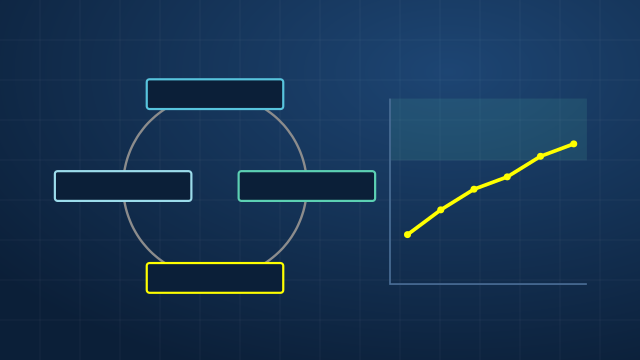
After two or three mocks, patterns appear. Most errors are one of four kinds: knowledge (did not know it), reading (misread the question), calculation (calculator or arithmetic slip) and time (rushed or skipped). Each needs a different fix: knowledge needs study, reading needs slower reading, calculation needs drilling, and time needs pacing practice.
Save the official mocks
CFA Institute provides mock exams with registration. Its questions are the closest thing to the real exam's style, so save at least one for the final two weeks as a final check.
How to read the scores
There is no published pass mark, so treat mocks as a direction, not a verdict. Many providers suggest aiming for 70% or more on full mocks in the final weeks. More important is the trend: rising scores and a shrinking error log.
A six-week mock schedule
| Week before the exam | Mock | Review |
|---|---|---|
| 6 | Mock 1 (third-party) | 1–2 days of review |
| 5 | Mock 2 | Review, then targeted topic practice |
| 4 | Mock 3 | Review |
| 3 | Mock 4 (official CFA Institute mock) | Full review |
| 2 | Mock 5 (official) | Full review; ethics practice |
| 1 | One half-mock early in the week; light review after | Rest the last two days |
Keep an error log
For every wrong answer, write one line: topic, why you got it wrong, and the rule you will use next time. Then group the reasons:
- Knowledge gap: you did not know it. Re-learn the reading.
- Misread: you knew it but missed "except" or "least likely". Slow down on the stem.
- Calculation slip: wrong sign, wrong mode, too few decimals. Check calculator habits.
- Time pressure: you guessed because the clock ran out. Practise pacing.
After three mocks the pattern is usually obvious, and fixing the biggest group is the fastest way to raise your score.
What score to aim for
There is no official pass mark, and mock difficulty varies by provider. Many candidates treat scores consistently above about 70% in good-quality mocks as a comfortable sign. A rising trend matters more than any single score.
Questions people ask
How many mock exams should I take?
Most candidates sit three to six full mocks in the final five or six weeks. More is not better if there is no time to review each one properly.
What score on a mock exam means I am ready?
There is no official pass mark. Many providers suggest aiming for around 70% on full mocks, but a rising trend and a shrinking error log matter more than any single score.
What should an error log contain?
For each miss: the topic, the reason (knowledge gap, misread, calculation slip or timing) and the fix. Patterns in the reasons tell you what to work on.
Should I retake the same mock?
Only after a gap, and only to check that the lessons stuck. A retake score overstates readiness, because you remember the questions.