
Where formulas become intuition.
Short animated lessons that rebuild every CFA idea from what has to be true, so you understand it once instead of memorising it three times.
 50 concepts, free
Financial statements and economics, rebuilt from the basics.
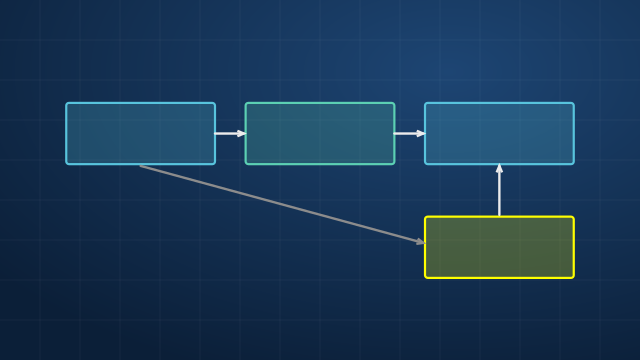
How the three financial statements connect
The income statement, balance sheet and cash flow statement are three views of one set of transactions. Change one, and the others must move.
Start reading Strategy
A plan for every level, from first reading to exam day.
Building a 300-hour CFA study plan around a full-time job
Work backwards from exam day, protect the last six weeks for practice, and decide in advance what happens when a week goes wrong.
Read the plan 2027 facts
Exam windows, fees and pass rates in one place.
CFA exam dates and fees for 2027
Every 2027 exam window, the early and standard registration deadlines, the fees by level, and the deferral rule that changes in February 2027.
See dates and feesWhat is a first-principles approach?
Most exam prep hands you conclusions to memorise. A first-principles approach goes the other way: it starts from a few facts that cannot be otherwise and reasons forward until the conclusion is unavoidable. You remember it because you can rebuild it.
Start from what must be true
Strip the topic to its bedrock: money today is worth more than money later; a balance sheet always balances; buyers buy less when prices rise.
Build one step at a time
Add one idea at a time, with a picture at every step, and check that each step follows from the last. Nothing is introduced just because the syllabus says so.
Name the formula last
When the formula appears, it only writes down what you can already see. Then you test yourself by predicting the answer before working it out.
An example: why bond prices fall when rates rise
Memorise: "price and yield are inversely related."
Reason: a bond is a fixed set of future payments. Its price today is what those payments are worth today. A higher interest rate means each future payment is worth less today, so the total, the price, must fall. And the further away a payment is, the more it shrinks. That last sentence is all duration really is.
Three exams, each built on the one before.
The facts below are CFA Institute's, checked 16 November 2026.
The tools
Breadth across ten topics, from ethics and quantitative methods to derivatives and portfolio management.
- Latest pass rate
- 43%
- Format
- 180 multiple choice
- Time
- 2 × 2 h 15 min
- Windows
- Feb, May, Aug, Nov
Valuation
Applying the tools: what an asset is worth and which assumptions drive the answer, through short case studies.
- Latest pass rate
- 45%
- Format
- 22 item sets, 88 Qs
- Time
- 4 h 24 min
- Windows
- May, Aug, Nov
Portfolio management
Synthesis for a real client: allocation, construction, risk and ethics, plus one specialised pathway.
- Latest pass rate
- 47%
- Format
- 11 item + 11 written sets
- Time
- 4 h 24 min
- Windows
- Feb, Aug
Pass rates, session by session
Fewer than half of candidates pass any level in a typical session. The chart shows the most recent results; the guide has every session and the five-year averages.
All pass ratesGood preparation starts with understanding.
While the video course is in production, the written material is open: guides, strategy and 50 prerequisite concepts, each with its own animated diagram.
 Concept 212 min read
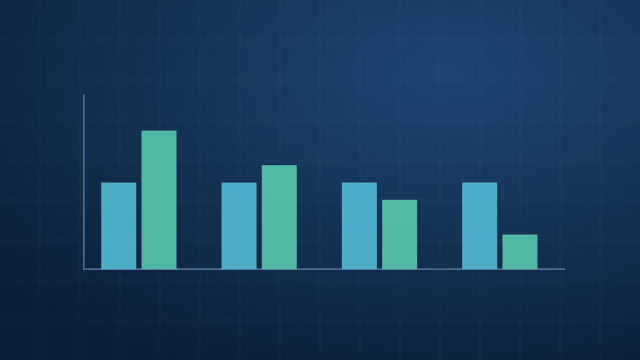
Deferred tax: tax base and temporary differences
Companies keep two sets of rules, one for the accounts and one for the tax authority. Deferred tax records the tax effect of differences that will reverse.
Financial Statement AnalysisConcept 022 min readHow the three financial statements connect
The income statement, balance sheet and cash flow statement are three views of one set of transactions. Change one, and the others must move.
Financial Statement Analysis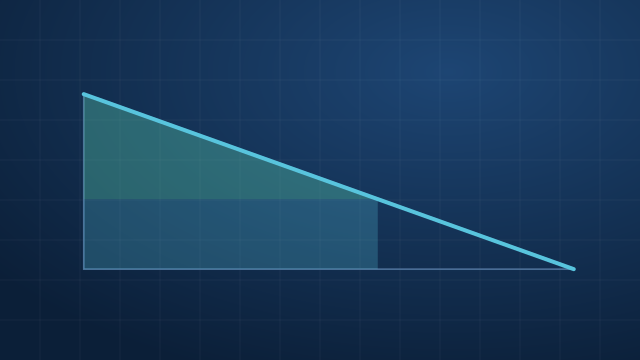 Concept 272 min read
Price elasticity of demand and total revenue
Elasticity measures how strongly buyers react to a price change. It decides whether a price rise raises or lowers a seller's revenue.
Economics Concept 162 min read
The LIFO reserve and converting LIFO to FIFO
US companies using LIFO disclose how much higher their inventory would be under FIFO. That one number lets you restate them for comparison.
Financial Statement Analysis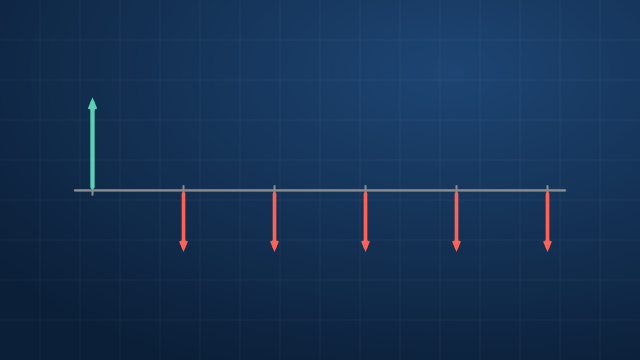 Study blog28 min read
BA II Plus calculator guide: every function, on a calculator you can press
The complete guide to the BA II Plus for CFA candidates, built around a working replica of the calculator. Press the keys yourself or press Play and watch every keystroke: settings, clearing, TVM, amortisation, bonds, cash flows, NPV and IRR, statistics, regression and every other worksheet.
Study strategy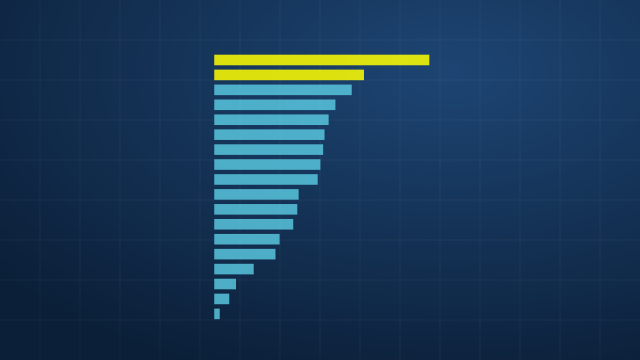 Study blog9 min read
CFA salary by country: what charterholders earn around the world
CFA pay in 19 countries, from the United States, Switzerland and Singapore to Germany, the UAE, India and Nigeria, in local currency and US dollars. What drives the gaps, why different sources disagree, and how to read any CFA salary figure.
Study strategy Study blog3 min read
CFA requirements: degree, passport, work experience and who can register
You do not need a finance degree, or even a finished degree, to start. You do need a passport, English, and either a degree in sight or enough work experience. Here is exactly when each level opens up.
Study strategy Study blog3 min read
Is the CFA worth it? An honest answer for 2026
For investment careers the charter is still one of the strongest signals you can earn, at a fraction of an MBA's cost. For careers outside investing, the same hours may be better spent elsewhere.
Study strategy CFA guide3 min read
CFA pass rates, session by session
The latest pass rates for every level, the long-run averages, and the one statistic that matters most for you: first-time candidates do much better than those who defer.
CFA Program guide CFA guide3 min read
CFA Level I: format, topics and weights for 2026 and 2027
Level I tests breadth across ten topics in 180 multiple-choice questions. Here is the format, the topic weights, and what changes for exams from February 2027.
CFA Program guide CFA guide2 min read
CFA Level II: item sets, topics and weights
Level II is valuation, tested through 22 case studies with four questions each. The format, the weights, and why it feels harder than Level I.
CFA Program guide CFA guide3 min read
CFA Level III: constructed response, pathways and weights
Level III mixes item sets with written answers, adds a specialised pathway worth a third of the exam, and asks you to synthesise everything for a client.
CFA Program guideWhat every lesson gives you
The idea, drawn
Animated diagrams and realistic market data, one idea on screen at a time.
The intuition behind it
Why a result has to be true, told with an everyday analogy before any algebra.
Pause and predict
Short questions inside the lesson, so you commit to an answer before you see it.
Exam questions, solved
Vignette questions answered the way the exam asks them, including why each wrong option is wrong.
Who builds First Principles
Gowtham Kumar
I build First Principles: the lessons, the animations and this site. Questions, corrections and ideas for topics are welcome by email.
2027
Short video lessons, intuition first, with exam-style questions solved step by step.