Candidates who pass typically log 300 hours or more per level. Prep providers broadly agree, and Level II often takes more. The hours are not the hard part; consistency over five or six months is. A plan exists to make the next study session obvious, so you never spend energy deciding what to do.
Work backwards from exam day
- Fix the end. Put your exam date in the calendar, then block the final week as rest and light review, and the four weeks before it for full mock exams.
- Reserve a practice block. Before the mocks, set aside three to four weeks for topic-by-topic question practice.
- What is left is for learning. Divide it across the topics in proportion to their exam weights, not their page counts. For Level I in 2027, quantitative methods now deserves as much time as fixed income.
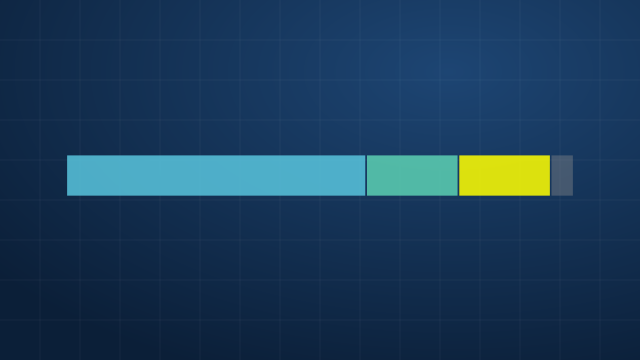
With about 22 weeks, that is roughly 13 weeks of learning, 4 of practice, 4 of mocks and 1 of rest: about 14 hours a week.
Make the weekly rhythm boring
- Weekdays: 1 to 1.5 hours, before work if you can. Mornings are less likely to be cancelled by a late meeting.
- Weekends: one long block (3 to 4 hours) and one shorter one.
- One topic at a time, finishing each reading with its practice questions the same week. Reading without questions feels productive and is not.
Plan for the bad week
Something will go wrong: a deadline, an illness, a holiday. Decide now that a missed week is absorbed by the practice block, never the mock block. If you fall more than three weeks behind, cut depth in the topics with the smallest weights rather than skipping whole topics.
Track what matters
Log two numbers each week: hours studied and percentage correct on practice questions. Hours show whether the plan is realistic; accuracy shows whether it is working. Mock scores in the final month are the best predictor you have, and many providers suggest aiming for 70% or more before exam day.
The first-principles part
Most wasted hours come from re-learning things you memorised and forgot. When you meet a formula, spend five extra minutes on why it has the shape it has. The prerequisite concepts on this site are written that way.
An example week for someone working full time
| Slot | What |
|---|---|
| Mon, Tue, Thu evenings (1.5 h each) | New reading with questions the same evening |
| Wed | Off, or catch-up only |
| Fri evening (1 h) | Questions on the week's topics |
| Saturday morning (4 h) | The week's hardest material, then a mixed question set |
| Sunday (3 h) | Review mistakes, flashcards, plan next week |
About 13 hours a week, so roughly 300 hours in 23 weeks. If a week is lost, do not try to double the next one; move one lower-weight topic into the revision phase instead.
Questions people ask
How many hours a week should I study for the CFA exams?
Around 12 to 15 hours a week over five to six months covers the 300-plus hours most passing candidates report. Two weekday evenings plus a long weekend session is a common pattern for people working full time.
When should I start studying?
Count back about six months from your exam window, then add two or three weeks of buffer for work trips, illness and holidays. Starting later is possible, but every lost week comes out of practice time, which is the most valuable part.
What if I fall behind the plan?
Do not try to catch up by reading faster. Protect the practice and mock-exam weeks, cut the depth of review on topics you already score well in, and make up time on the largest-weight topics first.
Should I study every topic in order?
Not necessarily. Starting with ethics or quantitative methods helps because other topics lean on them, but switching topics every week or two keeps earlier material fresh and avoids a long gap before the exam.