Accruals answer "what did we earn this period?", not "what cash came in?"
From first principles
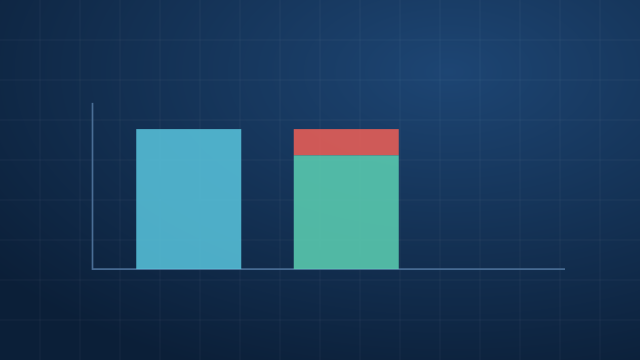
If profit followed cash, a company that pre-sold a year of subscriptions in January would show a huge January profit and eleven months of losses. That picture would mislead anyone using it to judge performance. So accounting records revenue when it is earned and expenses when they are incurred, and matches expenses to the revenue they helped produce.
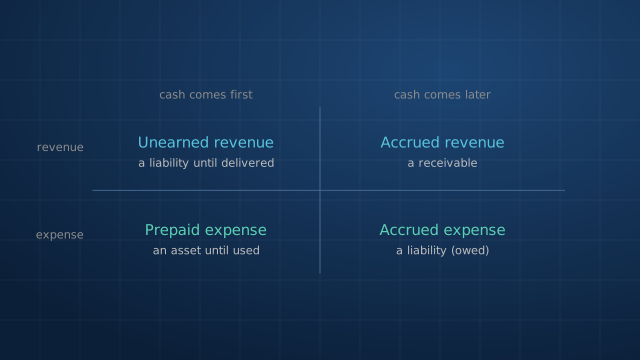
Whenever cash and recognition fall in different periods, the difference has to sit somewhere until they catch up. It sits on the balance sheet:
- Cash received before revenue is earned: unearned (deferred) revenue, a liability, because you still owe the customer.
- Revenue earned before cash arrives: accrued revenue, a receivable.
- Cash paid before the expense is incurred: prepaid expense, an asset.
- Expense incurred before cash is paid: accrued expense, a liability.
Worked example
A software firm receives 1,200 on 1 October for a 12-month licence. At its 31 December year-end it has earned 3 months: revenue 300, and unearned revenue 900 remains a liability. Cash flow from operations still shows the full 1,200 inflow.
Exam traps
- Unearned revenue is a liability, not revenue. Rising unearned revenue is often good news: customers paying in advance.
- Accruals reverse. A large accrued revenue balance today means cash should arrive soon; if it does not, revenue may have been booked too early.
Questions people ask
What is the difference between cash and accrual accounting?
Cash accounting records money when it moves. Accrual accounting records revenue when it is earned and costs when they are used up, whatever the timing of the payment. Listed companies must use accruals, because cash timing alone hides performance.
What are the four types of accruals?
Cash received before the work (unearned revenue), work done before the cash (accrued revenue), cash paid before the cost is used (prepaid expense) and cost used before it is paid (accrued expense). Each one parks a timing difference on the balance sheet.
Why do analysts watch accruals?
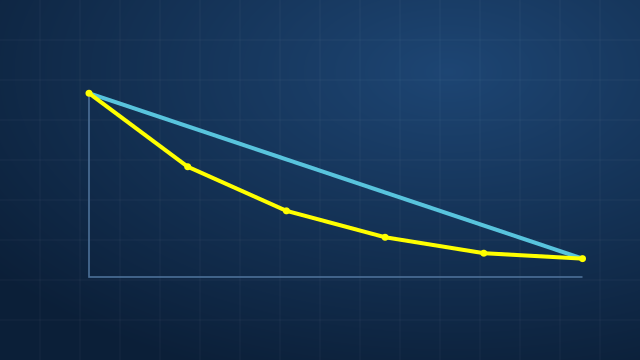
Because they rest on estimates. When profit grows much faster than operating cash flow year after year, the gap is made of accruals, and large accruals have historically been followed by weaker earnings.