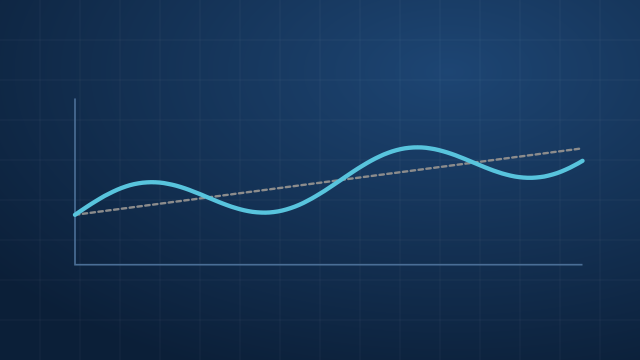
Recovery → expansion → slowdown → contraction, around a rising trend.
From first principles
Real GDP does not grow smoothly. Spending, credit and confidence feed on each other, so output overshoots and undershoots its trend:
- Recovery: output starts rising from the trough; spare capacity is large; inflation is low.
- Expansion: output grows above trend; hiring picks up; capacity tightens.
- Slowdown: growth fades near the peak; inflation and interest rates are often at their highest.
- Contraction: output falls (a recession if it is sustained); unemployment rises.
How the main sectors behave:
- Consumers: spending on durables (cars, appliances) swings most, because purchases can be postponed; services and staples are steadier. Consumer confidence and real income growth lead spending.
- Housing: very sensitive to interest rates and credit. It often turns early, and its swings spread through construction, furnishings and banks.
- External trade: imports rise with domestic demand (pro-cyclical); exports depend on foreign growth and the exchange rate.
Worked example
A central bank raises rates sharply. Mortgage costs rise; housing starts fall first; furniture and appliance sales follow; consumer confidence drops; durable spending slows; imports fall with demand. Exports may hold up if trading partners are still growing.
Exam traps
- Leading, coincident and lagging indicators: housing permits and stock prices tend to lead; unemployment tends to lag.
- Imports rise in expansions, which can worsen the trade balance just when the economy is strong.
Questions people ask
What are the phases of the business cycle?
Recovery from a trough, expansion, a peak or slowdown, and contraction. Each phase has typical patterns in inventories, hiring, inflation and interest rates.
Which sectors do well in each phase?
Cyclical sectors such as industrials, materials and consumer discretionary tend to lead early in recovery. Defensive sectors such as utilities, staples and healthcare hold up better in a contraction.
Why are inventories important in the cycle?
Firms over-order in good times and cut orders sharply when sales slow, which magnifies swings in production. Rising inventory-to-sales ratios are an early warning of a slowdown.