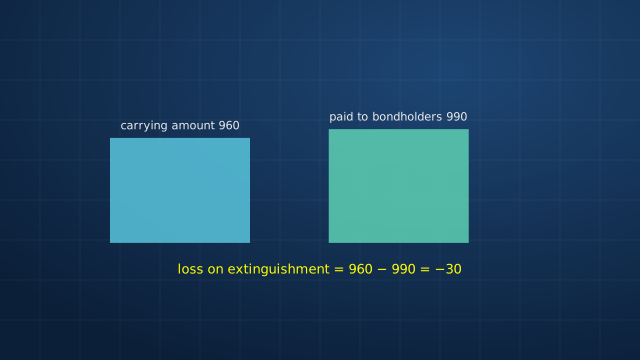
Interest expense = market rate at issue × carrying amount. Coupon paid = coupon rate × face value. The difference amortises the discount or premium.
From first principles
When a company issues a bond, investors hand over what its coupons and final repayment are worth today, using the market rate on the day of issue to discount them.
- Coupon below the market rate → investors pay less than face value: a discount.
- Coupon above the market rate → a premium.
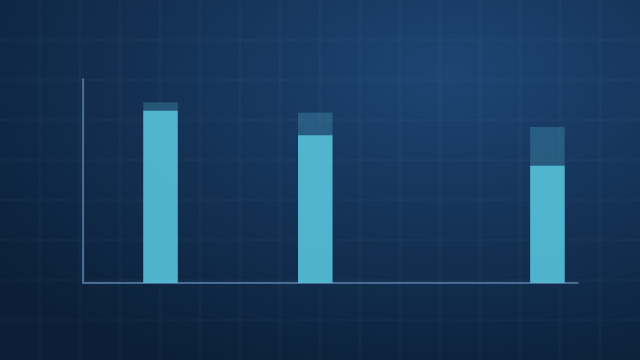
The liability is recorded at that price. Its true cost of borrowing is the market rate at issue, so under the effective interest method interest expense each period = market rate × carrying amount. The coupon is fixed. The difference changes the carrying amount, which walks steadily to face value by maturity.
Move the market rate and watch:
Worked example
Face 1,000, 5 years, 5% annual coupon, market rate 7%. Price = 918.0. Year 1: interest expense = 7% × 918.0 = 64.3; coupon 50; carrying amount rises by 14.3 to 932.3. By year 5 it reaches 1,000.
Exam traps
- Discount bonds: interest expense > coupon, rising over time. Premium bonds: expense < coupon, falling.
- Cash flow: the coupon is the cash; the amortisation is non-cash and is added back in the indirect method. The proceeds at issue and the principal repaid are financing cash flows.
- Once issued, the book value ignores market rates under amortised cost. Only bonds measured at fair value move with rates.
- Costs of issuing the bond are netted against the debt on day one, under IFRS and US GAAP alike.
Questions people ask
What is the effective interest method?
Interest expense each period equals the bond's carrying amount at the start of the period times the market rate at issue. The difference from the cash coupon adjusts the carrying amount toward face value.
Why is interest expense different from the coupon paid?
Because the bond was sold at a discount or premium. A discount means investors receive part of their return at maturity, so expense exceeds the coupon; a premium works the other way.
Where does the coupon go in the cash flow statement?
Under US GAAP, interest paid is operating. Under IFRS it can be operating or financing. The money raised at issue and repaid at maturity is always financing.