Gain or loss on extinguishment = carrying amount − amount paid.
From first principles
On the balance sheet, a bond sits at its amortised cost, not its market value. If interest rates have changed since issue, the market price differs from that book value. When the company retires the bond early (by calling it or buying it back), it pays the market or call price, and the difference must go somewhere: profit.
- Pay less than the carrying amount → gain (typically when rates have risen since issue).
- Pay more → loss (typically when rates have fallen and the company refinances more cheaply).
Worked example
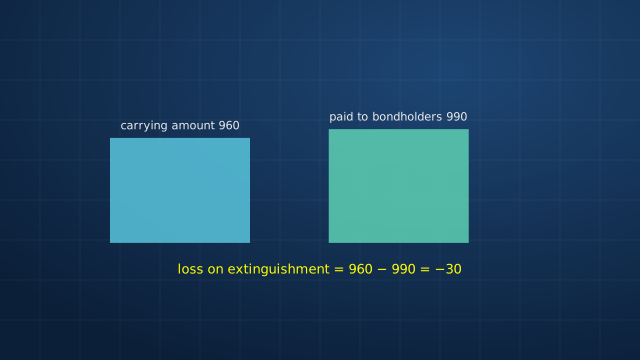
A bond carried at 960 is called at 990. Loss on extinguishment = 960 − 990 = −30, reported in profit, usually separate from operating results. Cash of 990 leaves through financing. In the indirect method the loss is added back to CFO, because it is non-cash and non-operating.
Exam traps
- The gain or loss is not operating income. Exclude it when forecasting.
- Repurchasing debt at a gain after rates rise can flatter earnings while making refinancing more expensive.
Questions people ask
How is the gain or loss on early repayment calculated?
Carrying amount of the debt minus the price paid to retire it. Paying more than the carrying amount gives a loss; paying less gives a gain.
Where is the gain or loss reported?
In profit for the period, usually as a separate line or in non-operating items. Analysts typically remove it from recurring earnings.
Why would a company repay debt early?
To refinance at a lower rate after rates fall, to escape restrictive covenants or to use spare cash. A gain from buying back debt cheaply often signals that the market doubts the company's credit.