Diminishing marginal returns: in the short run, the extra output from each extra worker eventually falls.
From first principles
In the short run, a firm can hire more workers but cannot instantly build more factory space. Picture a kitchen with two stoves: the first cooks are very productive, the third and fourth less so as they queue for the stoves, and the tenth mostly gets in the way.
Three measures describe it:
- Total product (TP): total output.
- Average product (AP): output per worker, TP / L.
- Marginal product (MP): extra output from one more worker, ΔTP / ΔL.
Once fixed inputs become a bottleneck, MP falls. TP keeps rising, but more slowly; if MP turns negative, TP falls.
Worked example
| Workers | Total output | Marginal product |
|---|---|---|
| 1 | 20 | 20 |
| 2 | 45 | 25 |
| 3 | 63 | 18 |
| 4 | 75 | 12 |
| 5 | 80 | 5 |
Diminishing returns start with the third worker.
Exam traps
- Diminishing returns is a short-run idea (some inputs fixed). Returns to scale is a long-run idea (all inputs change together).
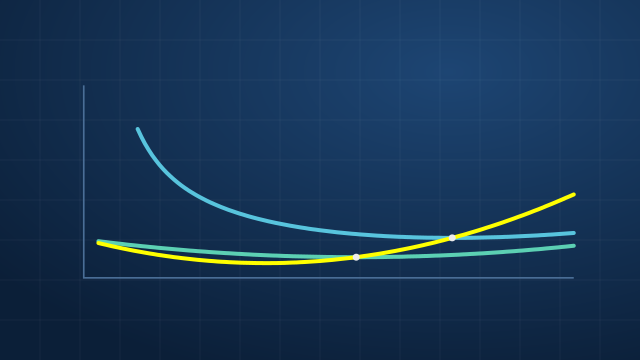
- MP crosses AP at AP's maximum: when the marginal worker is above average, the average rises.
Questions people ask
What is the law of diminishing marginal returns?
When one input is fixed, adding more of a variable input eventually adds less and less extra output. A kitchen with one oven gains a lot from a second cook and very little from a tenth.
Why does diminishing returns only apply in the short run?
Because it depends on at least one input being fixed. In the long run every input can change, and the question becomes returns to scale instead.
How is marginal product linked to marginal cost?
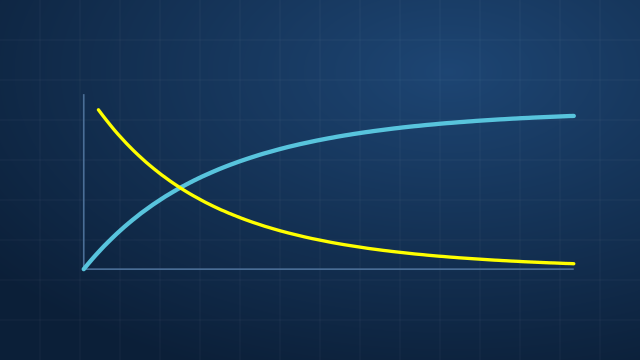
They are mirror images. When each extra worker adds less output, each extra unit of output needs more labour, so marginal cost rises.