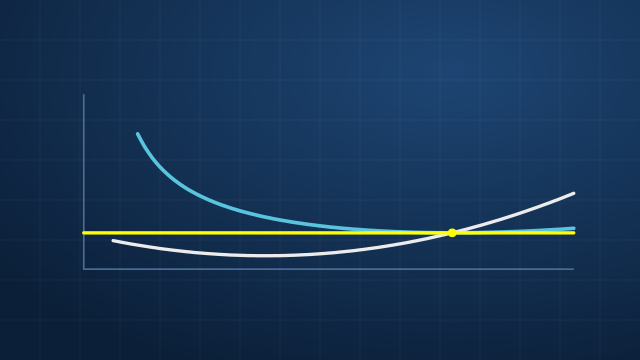
In the long run under perfect competition: P = MR = MC = minimum ATC, and economic profit is zero.
From first principles
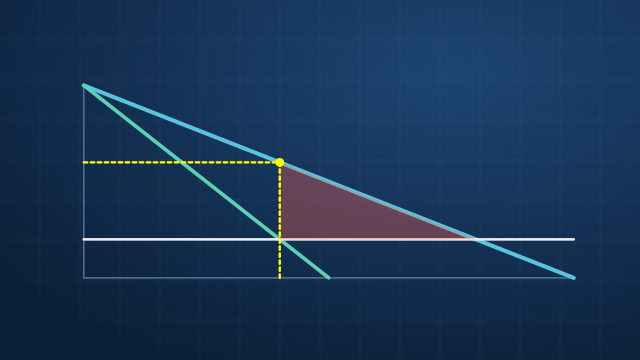
A perfectly competitive firm is a price-taker: the market sets the price, and the firm can sell as much as it likes at that price, so its demand curve is horizontal and MR = price. It produces where price = MC.
Now ask what happens over time:
- If the price is above ATC, firms earn economic profit. With free entry, new firms arrive; supply rises; the price falls.
- If the price is below ATC, firms lose money; some exit; supply falls; the price rises.
The only resting point is where price equals minimum ATC: no profit to attract entrants, no loss to drive exits.
Worked example
Minimum ATC is 12 at an output of 500 per firm. The market price is 15, so firms earn 3 per unit above cost. Entrants arrive until the price falls to 12. Each firm then produces 500 and earns zero economic profit, which still pays a normal return on the owners' capital.
Exam traps
- Zero economic profit is not zero accounting profit. Economic profit subtracts the opportunity cost of capital.
- Consumer surplus is maximised and there is no deadweight loss: price equals marginal cost.
Questions people ask
Why do firms earn zero economic profit in the long run?
Because any profit above normal attracts new firms, which pushes price down, and any losses drive firms out, which pushes price up. The market settles where price equals minimum average cost.
What does price taker mean?
A firm is so small relative to the market that it cannot change the price. It can sell as much as it likes at the market price and nothing above it.
Are any real markets perfectly competitive?
Few are, but some come close: wheat, foreign exchange and widely traded commodities. The model is a benchmark to measure other market structures against.